Category Archives: Laser Cutting

Collaboration

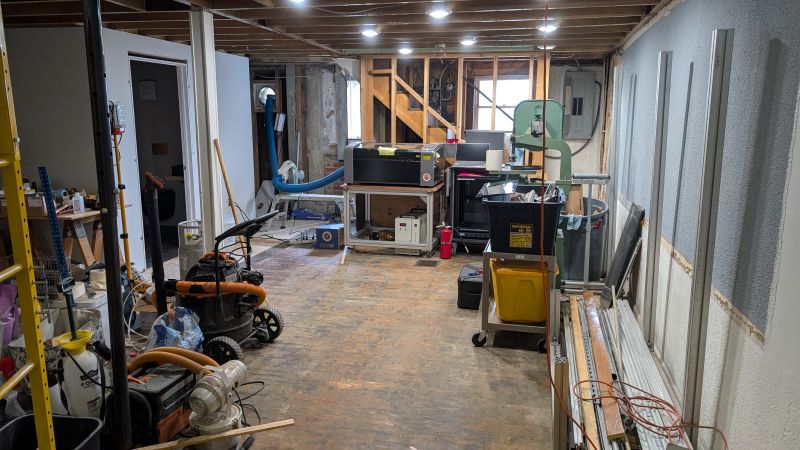
After a quick move to our new location on Jackson Street, our new laser cutter/engraver setup.

Interesting projects can often happen at a makerspace since it brings together people with different skill sets to help others create things. So it’s no surprise that when an artist, woodworker, and a maker got together to create a centerpiece that something pretty darn good looking came out of it!

Several months ago the Greencastle / Putnam County Development Center were asked if we could make a centerpiece for their 40th anniversary luncheon. And while we love working with other organizations in our community, normally our focus is on helping others make things or connecting them with others in our community. The ask also came when much of our equipment was still in storage and we were working out of temporary location until we found a new location for the makerspace.
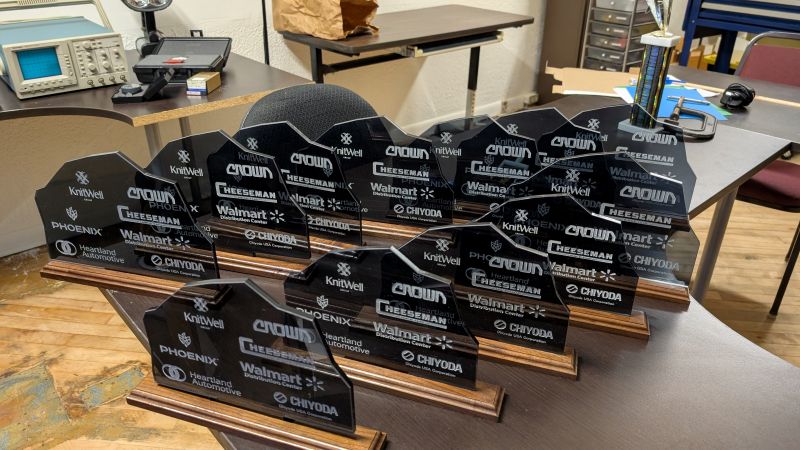
Black acrylic centerpieces representing how these companies are the 'rock' of the Greencastle / Putnam County Developement Center over the years.
Final centerpieces, made of laser engraved black acrylic on a locally sourced black walnut base.

So when we finally met in person to come up with ideas & specific details, there was only a month until the actual event. Not much time, especially considering they were looking for a dozen centerpieces that represented 7 of their donors and we had to still pull some of the equipment out of storage to recommission it. Just getting logo from each was a task too, but in the end we came up with something that three of us were able to complete in time for the event. A great exercise that reinforced the power of collaboration using some of the makerspace tools.
The Value of Prototyping

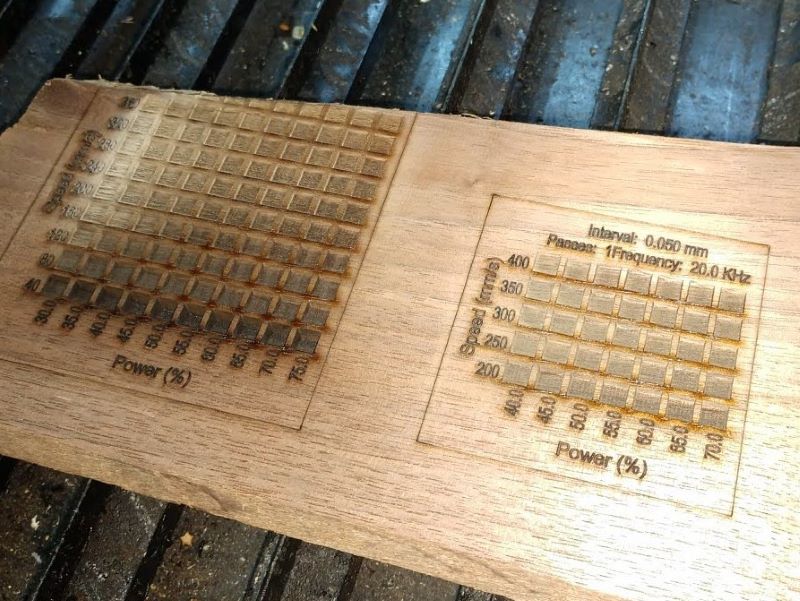
Power vs Speed grid to determine proper levels for the desired depth & darkness in black walnut wood.

One of our members wanted to make a commemorative plaque for his church using the CNC and laser engraver at Castlemakers. I volunteered to help, thought it would be a good chance to use our bigger CNC with some newly updated software and we could both learn in the process.

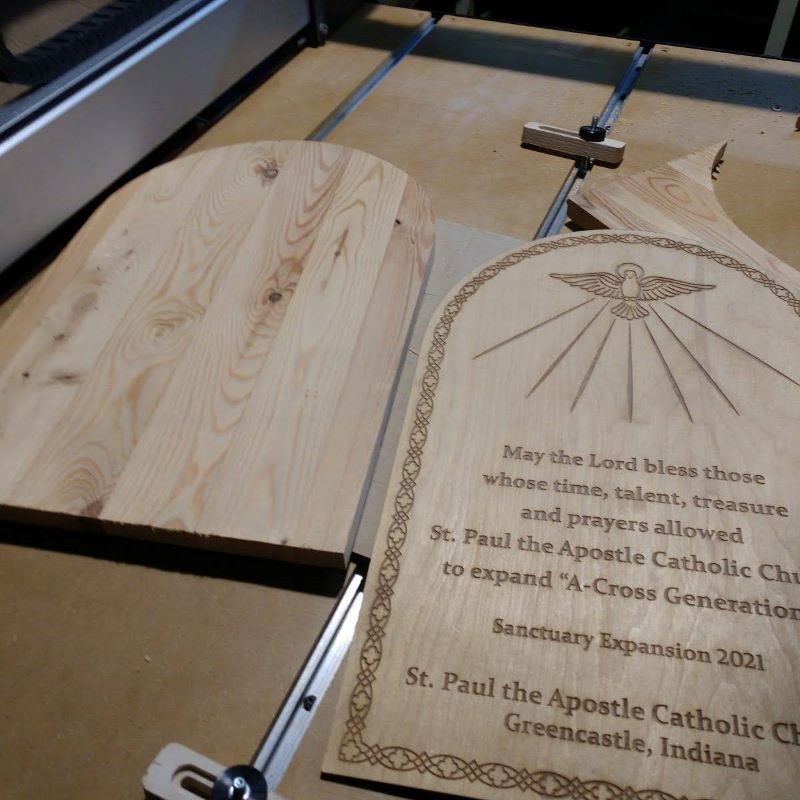
CNC plaque cutout with the first prototyped laser engraving.
First engraved prototype in plywood next to a full thickness pine cut out on our CNC.

Given the nice wood they wanted to use, doing several prototypes with lower cost wood seemed in order. It also would give him something to show the church committee approving the plaque. Ed was able to locally source some rough cut black walnut wood and another member Ian used his planer so the wood could be glued to an appropriate width.

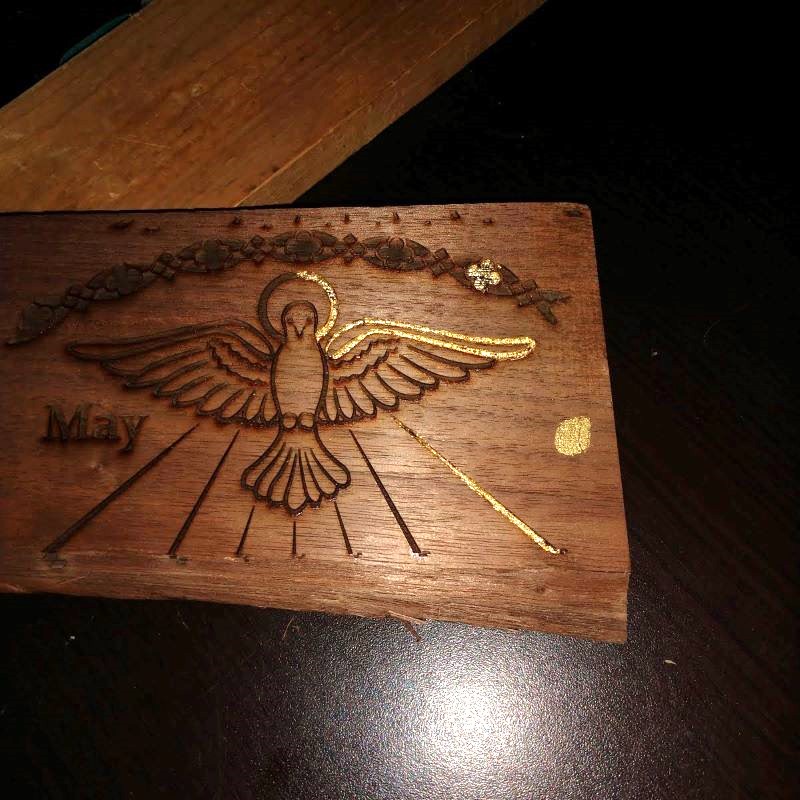
In the meantime one of the other church members created a great looking design for the engraving. For the first prototype, done in birch plywood, we just used the laser to cutting the shape to show others for approval. This resulted in a few minor changes and a decision by the group to add gilding to part of the dove and the rays on the plaque.

Black walnut test gilding before changes.

The final plaque is on darker wood, so we engraved a sample portion on some scrap black walnut and it’s a good thing we did! The original rays were too thin, making gilding extremely difficult. Now with the final design was completed, another prototype was made in pine the thickness of the final plaque to make sure the CNC portion of the project was going to work with the engraving.

Laser Etching Glass

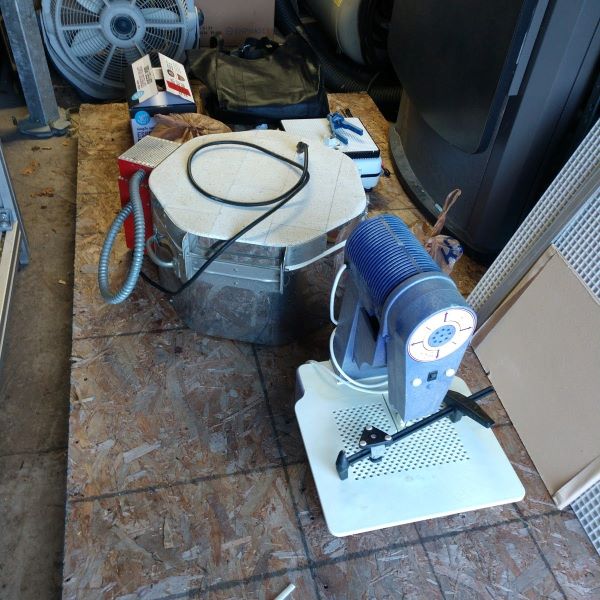
Glass fusing and slumping equipment
Newly donated glass fusing and slumping equipment.

It started right after some donated glass fusing and slumping equipment, more on that in a future post, that was dropped off at Castlemakers. Troy, one of our more creative members, came in during open shop night with a sheet of glass and asked what our laser engraver/cutter would do to it. Since I wasn’t sure, it seemed like the perfect opportunity to find out.

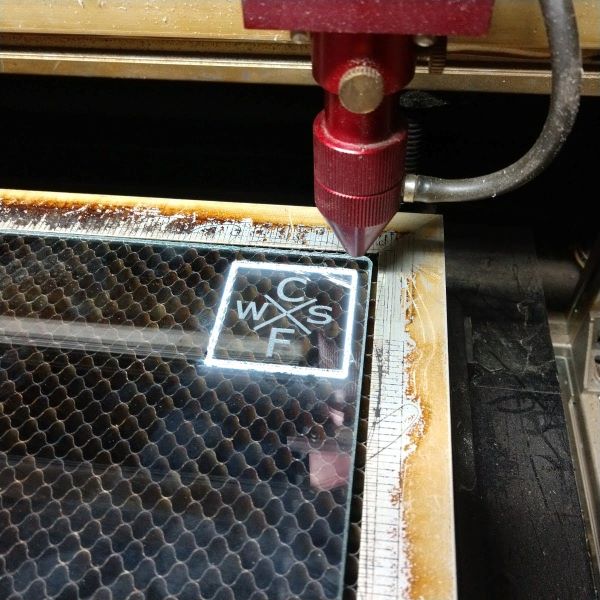
Etching glass with our CO2 laser.

As it turns out it, it works great for etching! Power settings were modest and it gives a nice frosted look to the glass in a single pass.

Cutting really didn’t work though. We weren’t totally surprised that cutting would be more difficult, so started experimenting with the settings.

With wood or acrylic you can make multiple passes that will continue to cut through the material. A slower process, and sometimes takes refocusing the beam, but you can get the job done.

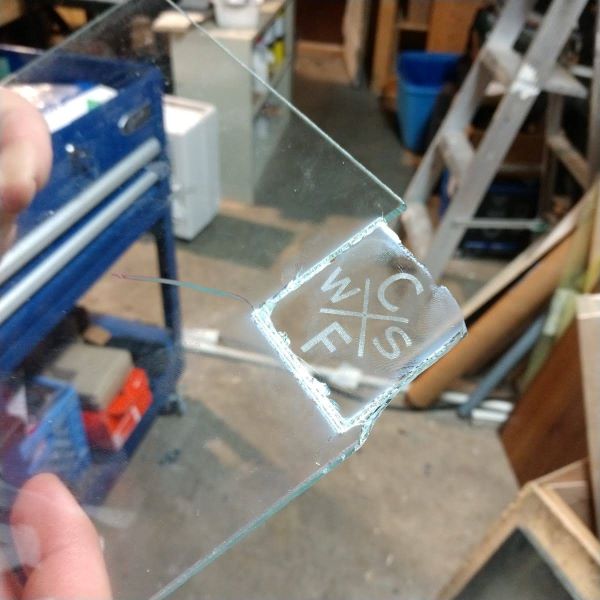
CO2 Laser Cutting Glass Results

In this case we learned that the glass seems to absorb enough heat that it starts chipping and cracking. Perhaps it was the type of glass we were using, the glass used was a home project leftover. You can see from the picture it was not a clean cut and eventually created a longer crack in the glass. For now we’ll just manually cut glass until we get the new diamond saw setup. But we did learn how to etch using the laser!